If you are wondering whether your cat is spraying or peeing, the first step is understanding the difference between marking behavior and regular urination outside the litter box.
Finding cat urine outside the litter box can be frustrating—but before you assume your cat is misbehaving, it’s important to figure out why it’s happening.
Cats may urinate outside the litter box for two very different reasons:
- Spraying (marking behavior)
- Regular urination (often caused by medical or litter box issues)
Understanding the difference can help you solve the problem faster.
What Is Cat Spraying?
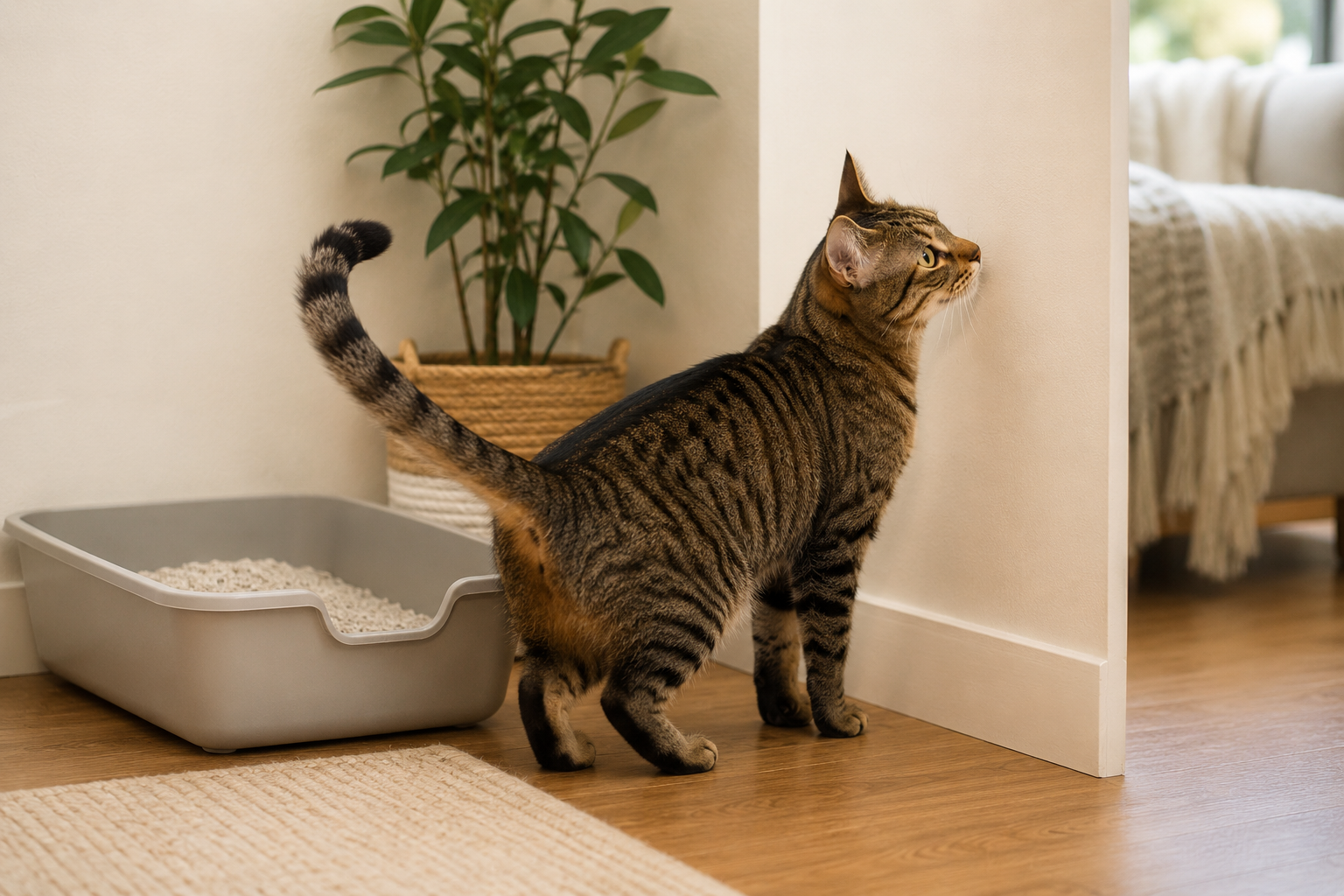
Spraying is a territorial marking behavior.
When cats spray:
- They usually stand upright
- Their tail may twitch
- They back up to a vertical surface
- They release a small amount of urine
Common spraying targets:
- Walls
- Furniture
- Curtains
- Doors
- New objects in the home
Spraying is often about communication rather than emptying the bladder.
What Does Regular Peeing Look Like?
Regular urination is different.
Cats typically:
- Squat low to the ground
- Fully empty their bladder
- Leave larger puddles of urine
- Usually pee on horizontal surfaces
Common places:
- Rugs
- Beds
- Laundry piles
- Floors
- Bathtubs
This often signals a litter box issue or medical concern.
Why Cats Spray
Territorial Behavior
Cats may spray to mark their territory.
This is common when:
- New pets enter the home
- Outdoor cats are visible through windows
- New people move in
Stress and Anxiety
Changes in routine can trigger spraying.
Examples:
- Moving
- New furniture
- Guests
- Loud noises
- New babies
Not Being Spayed or Neutered
Unfixed cats are significantly more likely to spray.
This is especially common during mating behavior.
Why Cats Pee Outside the Litter Box
Dirty Litter Box
Cats can be very particular about cleanliness.
Many cats refuse to use dirty boxes.
Wrong Litter Type
Some cats dislike:
- Scented litter
- Certain textures
- Covered boxes
Medical Problems
Medical issues can cause inappropriate urination.
Examples include:
- Urinary tract infections
- Bladder stones
- Kidney issues
- Diabetes
Watch for:
- Frequent attempts to pee
- Crying while urinating
- Blood in urine
Contact a vet immediately if you notice these symptoms.
Stress
Stress can also lead to inappropriate urination.
Cats may urinate in places where they feel safe.
How to Stop Spraying
- Spay or neuter your cat
- Reduce stress
- Block outdoor cat visibility
- Clean marked areas thoroughly
- Use enzymatic cleaners
Never punish your cat.
How to Stop Inappropriate Peeing
- Clean litter boxes daily
- Provide one box per cat, plus one extra
- Experiment with different litter types
- Schedule a veterinary visit if needed
When to See a Vet
See your vet immediately if your cat:
- Struggles to urinate
- Produces little urine
- Has blood in urine
- Stops eating
- Seems lethargic
Urinary issues can become serious quickly.
Final Thoughts
Spraying and regular urination are very different behaviors, and identifying which one your cat is doing is the first step toward solving the problem.
Most cases can be improved by addressing stress, litter box preferences, or medical issues—but if your cat’s behavior changes suddenly, always rule out health concerns first.
Understanding whether your cat is spraying or peeing can help you choose the right solution faster, whether that means reducing stress, improving the litter box setup, or checking for a possible health issue. For more helpful cat behavior tips, explore the rest of The Cat HQ blog, or visit our store to find litter mats, calming essentials, and products that make life with indoor cats easier.